Digital Marketing is the use of digital channels, platforms, and technologies to promote products or services to a targeted audience. Unlike traditional marketing (such as TV, newspapers, or billboards), digital marketing happens primarily on the internet and electronic devices, allowing businesses to reach people more precisely, measure results in real time, and adjust strategies quickly.
At its core, digital marketing is about connecting with customers where they spend most of their time today—online. Whether through search engines, social media, emails, or websites, businesses use digital tools to attract, engage, and convert potential customers into loyal buyers.

Key Characteristics of Digital Marketing
Digital marketing stands out because of several important features:
- Global Reach: Businesses can target audiences worldwide.
- Cost-Effective: Often cheaper than traditional advertising.
- Measurable Results: Performance can be tracked using analytics tools.
- Targeted Advertising: Ads can be shown to specific demographics.
- Interactive Engagement: Customers can interact directly with brands.
Types of Services in Digital Marketing
Digital marketing includes a wide range of services, each focusing on different strategies and channels. Below are the major types:
1. Search Engine Optimization (SEO)
SEO is the process of optimizing a website to rank higher in search engine results, especially on platforms like Google Search.
The main goal is to increase organic (non-paid) traffic.
Key components:
- On-page SEO: Optimizing content, keywords, titles, and meta descriptions.
- Off-page SEO: Building backlinks from other websites.
- Technical SEO: Improving site speed, mobile-friendliness, and indexing.
Example: If someone searches “best shoes online,” SEO helps your website appear on the first page.
2. Pay-Per-Click Advertising (PPC)
PPC is a form of paid advertising where businesses pay each time a user clicks on their ad. Platforms like Google Ads are widely used for this.
Key features:
- Instant visibility on search engines
- Budget control
- Highly targeted campaigns
Example: Sponsored ads that appear at the top of search results.
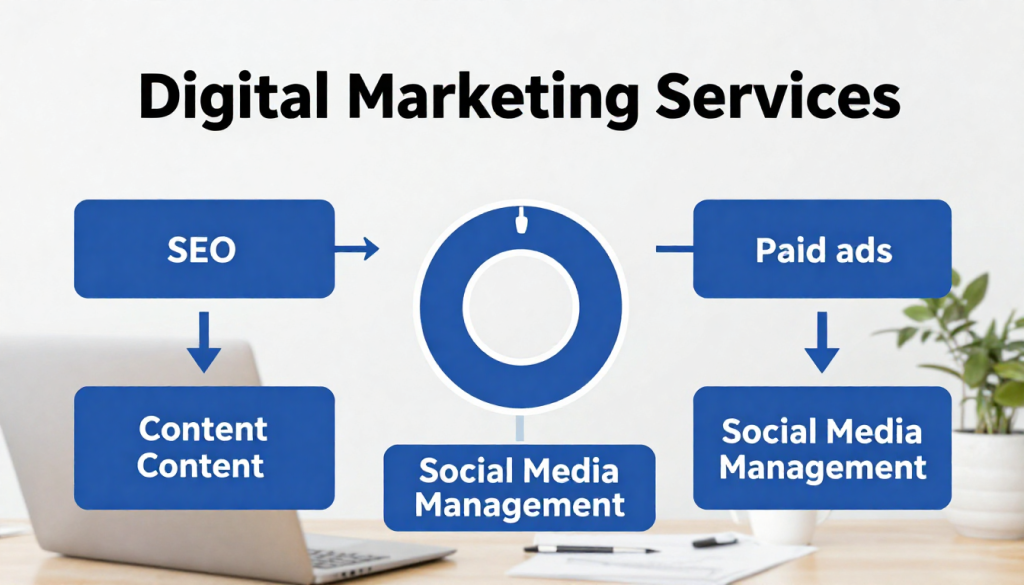
3. Social Media Marketing (SMM)
This involves promoting products and services through social media platforms such as Facebook, Instagram, LinkedIn, and X.
Services include:
- Content creation (posts, reels, stories)
- Paid social ads
- Community management
- Influencer collaborations
Benefits:
- Brand awareness
- Customer engagement
- Direct communication with users
4. Content Marketing
Content marketing focuses on creating valuable and relevant content to attract and retain customers.
Types of content:
- Blog articles
- Videos
- Infographics
- E-books
The idea is not just to sell, but to educate and build trust with the audience.
5. Email Marketing
Email marketing involves sending targeted emails to customers and prospects. Platforms like Mailchimp are commonly used.
Types of emails:
- Newsletters
- Promotional offers
- Product updates
- Welcome emails
Advantages:
- High return on investment (ROI)
- Personalized communication
- Customer retention
6. Affiliate Marketing
In affiliate marketing, businesses partner with individuals or companies (affiliates) who promote their products and earn a commission for each sale.
Example:
A blogger shares a product link, and if someone buys through that link, the blogger earns a percentage.
7. Influencer Marketing
This involves collaborating with popular individuals (influencers) on social media to promote products.
Benefits:
- Builds trust quickly
- Reaches niche audiences
- Boosts brand credibility
8. Online Reputation Management (ORM)
ORM focuses on managing a brand’s online image.
Activities include:
- Responding to reviews
- Handling negative feedback
- Promoting positive content
This is important because customers often check reviews before making decisions.
9. Conversion Rate Optimization (CRO)
CRO aims to increase the percentage of website visitors who take a desired action (like making a purchase).
Techniques include:
- Improving website design
- A/B testing
- Better call-to-action (CTA)
10. Mobile Marketing
With the rise of smartphones, mobile marketing targets users on mobile devices.
Includes:
- SMS marketing
- Mobile apps
- In-app advertising
Apps like WhatsApp are often used for direct communication.
11. Video Marketing
Video content is one of the most engaging forms of digital marketing. Platforms like YouTube play a major role.
Types:
- Product demos
- Tutorials
- Advertisements
- Live streaming
12. Marketing Analytics
Analytics involves measuring and analyzing marketing performance.
Tools include:
- Google Analytics
- Social media insights
Purpose:
- Track user behavior
- Measure ROI
- Improve strategies
Importance of Digital Marketing
Digital marketing has become essential for businesses of all sizes due to:
- Changing Consumer Behavior: People research online before buying.
- 24/7 Availability: Businesses can operate anytime.
- Better Engagement: Real-time communication with customers.
- Data-Driven Decisions: Strategies based on actual data.
Conclusion
Digital marketing is a powerful and essential tool in today’s business world. It allows companies to reach the right audience at the right time using various online channels. From SEO and social media marketing to email campaigns and analytics, each service plays a vital role in building brand awareness, generating leads, and driving sales.
As technology continues to evolve, digital marketing will keep growing, offering more innovative ways for businesses to connect with customers. Whether you are a small business owner or part of a large organization, understanding and using digital marketing services can significantly impact your success in the modern marketplace.